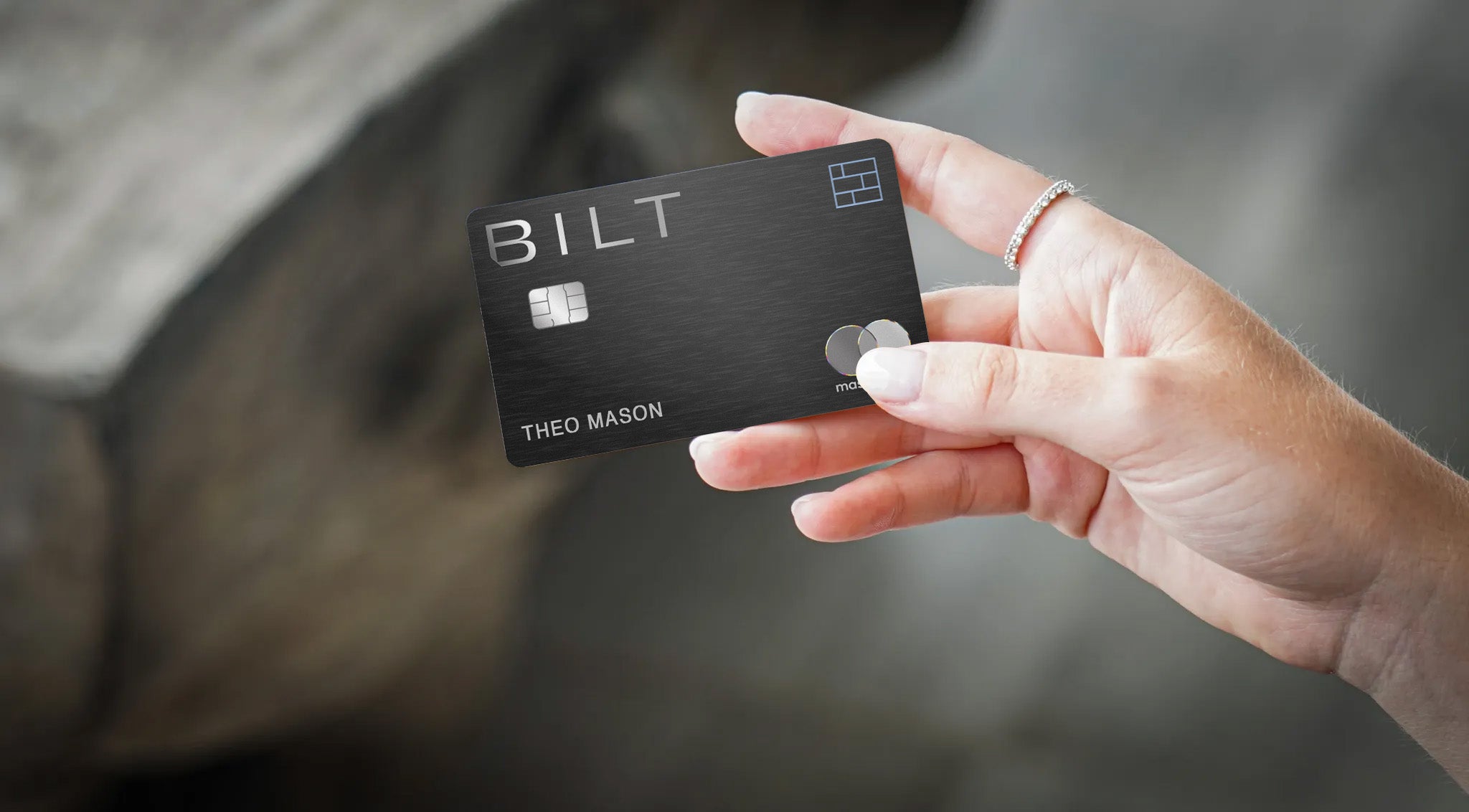

The "Golden Age" of Bilt was defined by a simple, beautiful rule: make five transactions—any five transactions—and you earn points on your rent. It was the "five bananas" strategy. But with the rollout of Bilt 2.0, that simplicity has been replaced by a convoluted system of spending tiers, closed-loop currencies, and annual fees.
If you feel like you need a spreadsheet just to pay your rent, you’re not alone. Here is why the math on Bilt 2.0 often fails to add up for the average optimizer.
The Two Paths to "Rewards"
Bilt 2.0 forces you to choose between two complicated earning structures. You can no longer just "exist" and earn; you must strategize.
Option 1: The Tiered Spending System
This path ties your housing rewards directly to your "everyday" (non-housing) spending as a percentage of your rent or mortgage.
| Everyday Spend (% of Rent) | Housing Reward Rate |
|---|---|
| Less than 25% | 250 flat points |
| 25% | 0.5x points |
| 50% | 0.75x points |
| 75% | 1.0x points |
| 100% or more | 1.25x points |
Option 2: The Bilt Cash System
You earn 4% Bilt Cash on everyday purchases. You then "spend" that Bilt Cash to unlock points on your housing. The conversion rate is fixed: $30 in Bilt Cash unlocks 1x points on $1,000 of housing.
Why the Math Doesn't Work
The fundamental flaw in Bilt 2.0 is the Opportunity Cost. To "unlock" your rent points, you are forced to move spending away from cards that likely offer much higher returns.
1. The "Spend Trap"
Imagine your rent is $3,000. To earn 1x points on that rent ($3,000 Bilt points), you must spend at least $2,250 (75%) in everyday purchases on your Bilt card.
- If you use the Bilt Blue ($0 AF), most of that $2,250 is earning only 1x point.
- If you had put that $2,250 on a 2% catch-all card (like the Wells Fargo Active Cash) or a 2x travel card (like the Capital One Venture X), you would have earned $45 cash back or 4,500 miles.
- By using Bilt to "save" the rent points, you are essentially trading 4,500 miles for 3,000 Bilt points. You are paying for your "free" points with lost value elsewhere.
2. The Death of the "Float"
Bilt 2.0 rent and mortgage payments are now processed via ACH (BiltProtect), meaning the money leaves your bank account immediately. Previously, many users could charge rent to the card and earn interest on that cash in a High-Yield Savings Account (HYSA) for 30 days until the statement was due. At 2026 interest rates, losing that "float" on a $3,000 rent payment is equivalent to losing roughly $10–$15 per month in pure interest—further eating into the "value" of the points.
3. Bilt Cash Friction
Bilt Cash is a closed-loop currency. Unlike cash back, it:
- Expires after 12 months.
- Is subject to "breakage" (you might have $20 left over that isn't enough to unlock a tier).
- Can only be used within the Bilt ecosystem. Treating Bilt Cash as having a 1:1 value with USD is a mathematical error because it lacks the liquidity and longevity of real money.
The Verdict: Who is this for?
Bilt 2.0 is no longer a "no-brainer." It is now a card for "One-Card Loyalists"—people who don't want to juggle an Amex Gold for dining, a Venture X for catch-all, and a Sapphire Preferred for transfers.
If you already have a refined "trifecta" of cards, the math suggests you might be better off ignoring the tiers, taking the flat 250 points on rent, and keeping your high-multiplier spend where it belongs. Bilt 2.0 didn't just change the rules; it changed the game from "rewarding loyalty" to "capturing your entire wallet."
Top Comments
Please log in to leave a comment.
No comments yet. Be the first to share your thoughts!